
“There are ghosts without whom
we wouldn’t be who we are.”
James A. Castillo is an intensely thoughtful designer and director who won an Emmy award for his VR film Madrid Noir. He has worked on an array of projects as a designer including Netflix Animation projects, the new Teenage Mutant Ninja Turtles movie, the Oscar nominated Mitchels vs the Machines, 3Bellow as well as Tales of Arcadia (created by Guillermo del Toro).
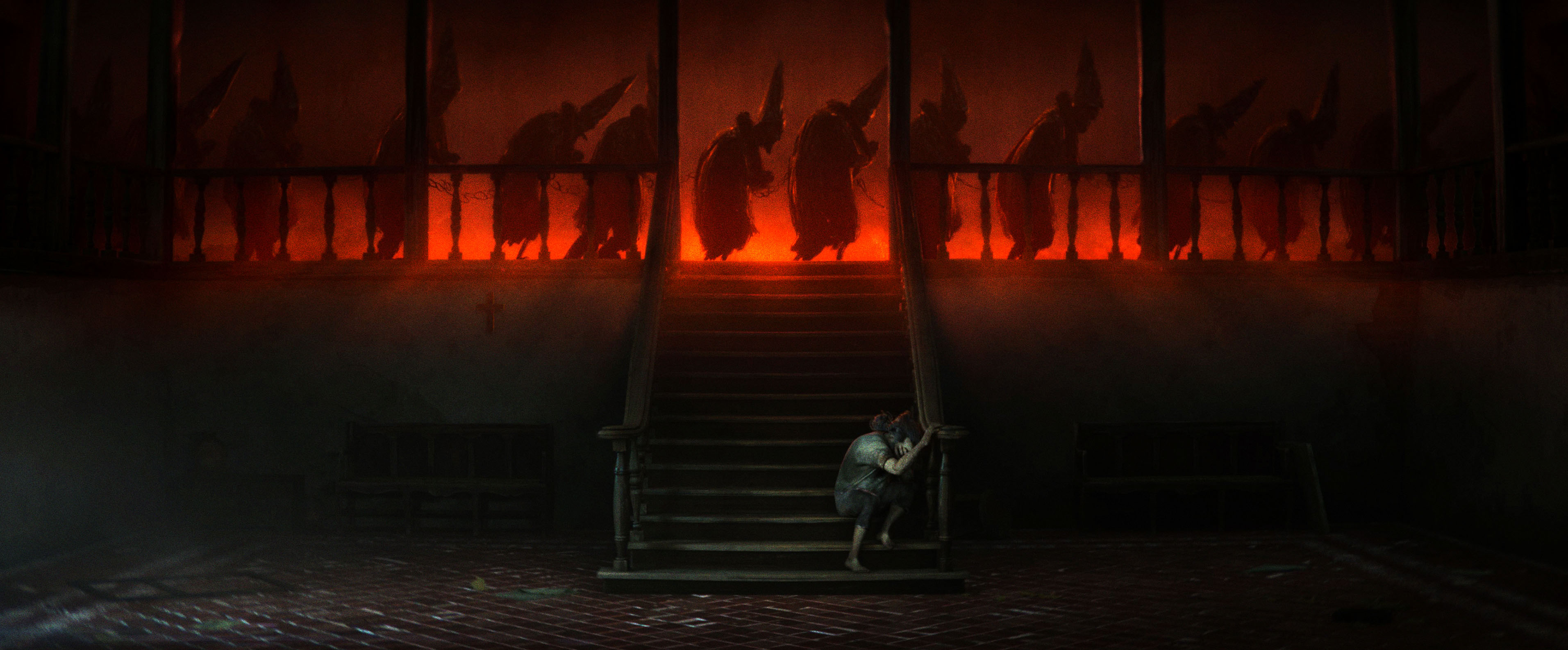
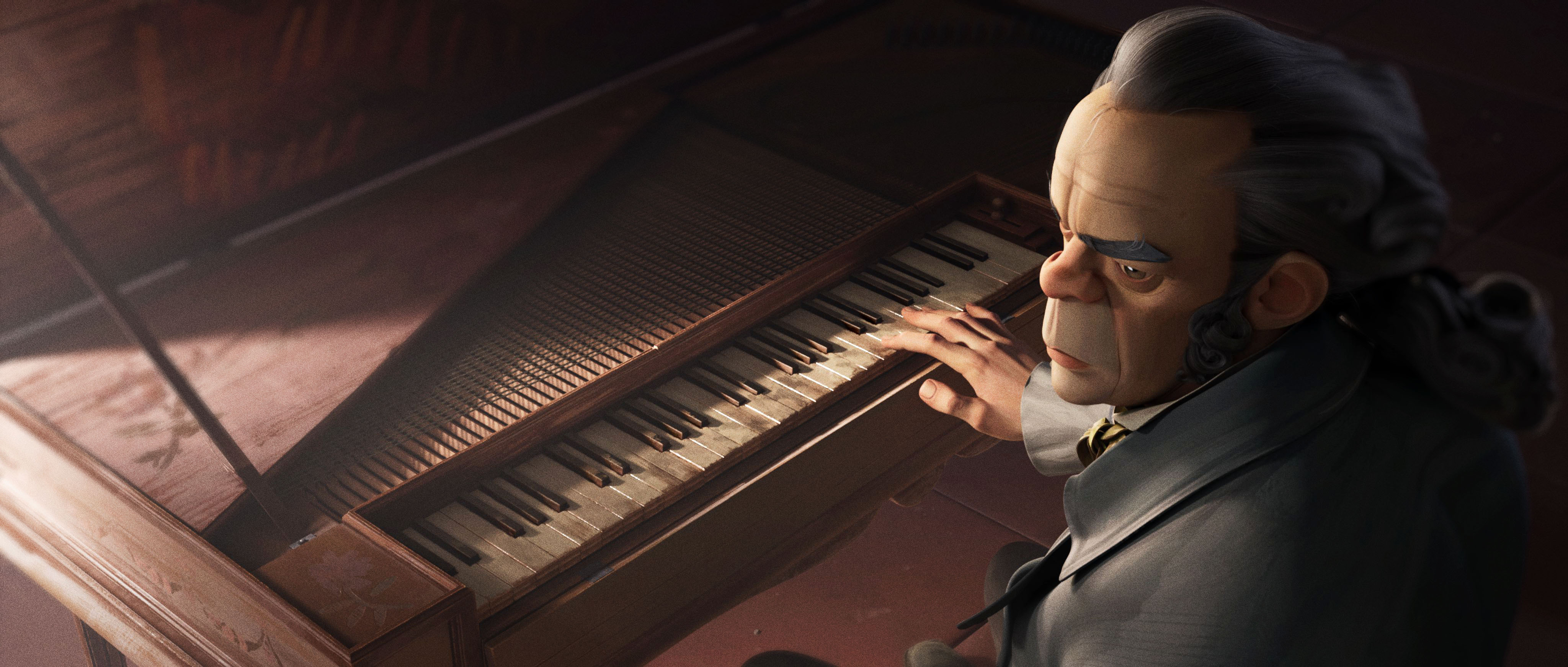
His new animated short The Quinta’s Ghost (which the QSSI hosted a screening of in June 2025 during its World Premiere at the Tribeca Film Festival) tells the story of renowned Spanish painter Francisco de Goya’s retreat to the house known as “La Quinta del Sordo” near the end of his life, before dying in exile in France. Taking inspiration from Goya’s Black Paintings of this period when the elderly painter who had a complicated relationship with king Fernando VII and was bitterly disappointed with Spain isolated himself, Castillo’s startling portrait includes the skillful participation of Goya award winning actress Maribel Verdú, who voices the spirit of the house Goya haunts with his own specters.
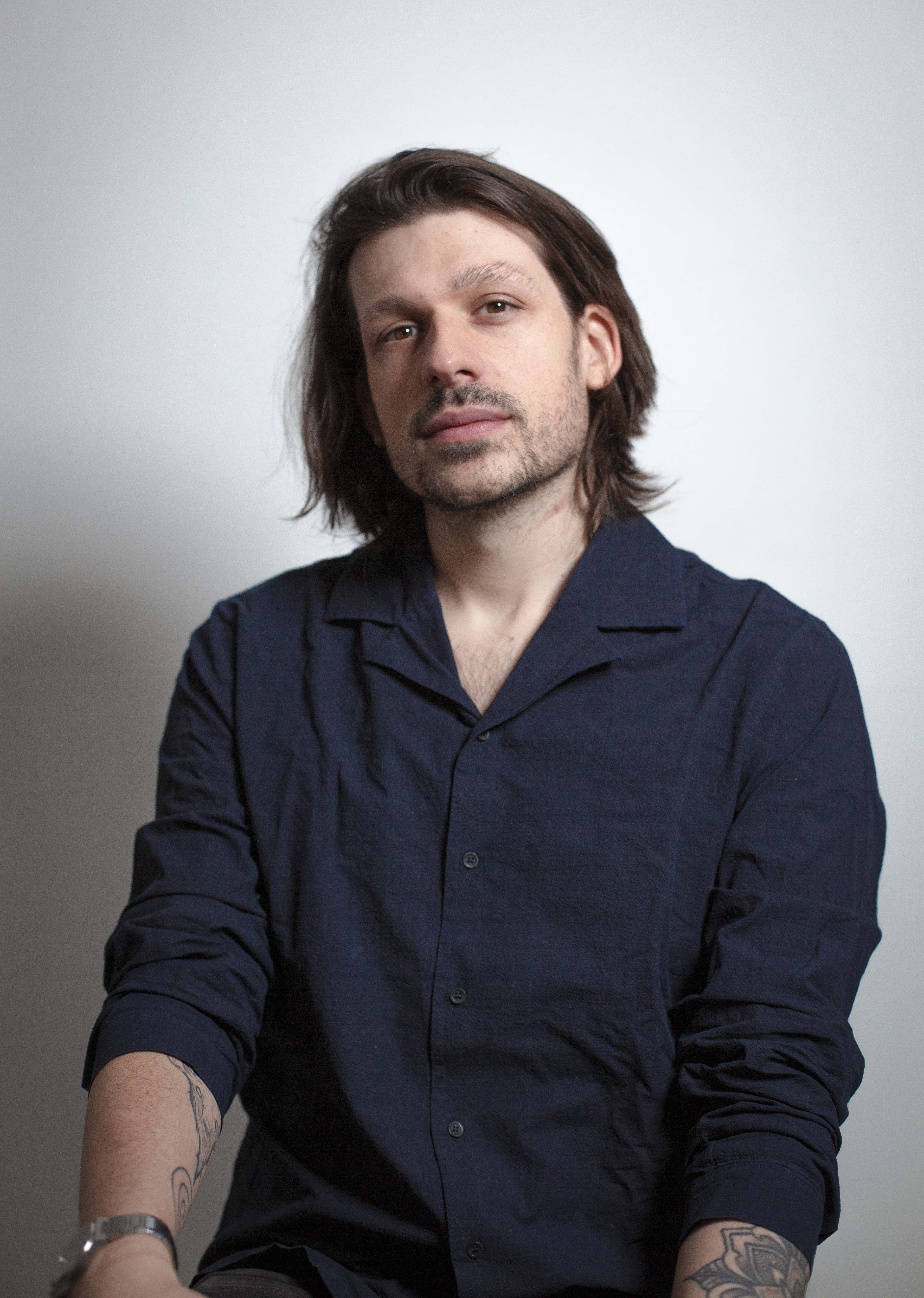
Credit James A Castillo
You are based in Madrid and London. Can you tell me where you grew up and were educated?
Sure. I was born in Madrid, to a Cuban father and an Irish mother, so I had a bit of a multicultural upbringing. I lived in Madrid until I was about 20 years old when I left to study abroad, partly because I had family that lived abroad and partly because it was hard to find work. This was around 2011 and Spain was going through a financial crisis. To find opportunities I had to go away. I studied in Singapore for a couple of years, after which I started my career in the videogame industry. I moved to London in 2015 to start pursuing a change of industry into animation. There, I started working in advertising and slowly climbed my way up into making films.
Since you’ve lived in several different countries, how do you see Spain’s film culture globally and also in Spain?
Well, I think there’s a reason why I came back to Spain three years ago. Partly, because when I left Spain there was very little industry in terms of animation. The industry was always there, but animation, in particular, was a pretty limited and small industry, and there weren’t a lot of opportunities. In the past few years, through some changes in tax law, there has been an increase in investment in film, which has led to the industry growing considerably.
When I came back, there were really good projects going on. The partners who made The Quinta’s Ghost with me, Illusorium, are a perfect example of that. They opened their studio around 2013, when they were pretty young, and have since developed an incredible career. Their story showcases a country where talent is now being rewarded, and even though a lot of studios require work from abroad, like the US and other European countries, there is a lot of talent right now in Madrid. So that coming back to Spain, having learned what I learned abroad, I feel very encouraged by the current industry to try to push the level by creating new and cool stuff, which is something that I cannot say is the case everywhere.
I think right now the industry is growing, and it has everything that it needs to have a global impact. You have the talent, ideas, drive and the economic environment in which to [excel]. I think it’s a pretty exciting time to do animation in Spain.
Credit: Illusorium
So, speaking of your short film The Quinta’s Ghost, Goya was an ilustrado [an artist of the Enlightenment] who ended up in self-imposed exile in France, despite having denounced Napoleon’s firing squads in Spain. Do you see The Quinta’s Ghost as linked to a certain idea of Spanish identity or is it more a universal statement on art?
That’s a really cool question. Yes, Goya denounced the killings, that’s obvious. But he also was someone who wasn’t completely opposed to the [French] occupation because he was, like you said, an ilustrado, and he was someone that understood that there was social and political progress to be made in Spain, inspired by what was happening in France. I mean, there’s a reason why he decided to exile himself to France and not Italy or somewhere else…he was somewhat connected with French culture.
Now as for the other question, I don’t know if the film is necessarily linked to any idea of Spanish identity. It is definitely based on the idea that we all have to come to terms with the time in history that we live in, and what role we play in that historical context, right? A big drive for the film is having Goya accept his place in Spanish history, what he has seen and experienced and how he feels about it. For example, there is a particular scene with a bull that, to us, was always about Goya [grappling with] how much he hates the hypocrisy and the politics of the time, and he’s very critical of how Spain is handling itself and how it’s been destroyed from within by some people. I always found it interesting that he could see the signs of an empire that was about to collapse. He didn’t know it, but the Spanish empire would eventually crumble not long after his death. I think he could see that there was a lot of stuff going on that he rejected, and that’s probably why he detached himself from public life at that time of his life.
But I also think that it’s important for all of us to understand that we come from the same place that makes the people that we hate, right? Like, as much as Spain had created this environment in which these corrupt people could thrive, these people that are destroying the country that we live in; Goya himself, is a product of the same environment and the same culture.
So, we need to embrace where we come from, what we are and the role we play within that historical context. I do think that he was incredibly aware of the flaws of what it meant to be Spanish at that time and I think that that’s partly why, knowing that he was very close to dying, he decided to do it outside of Spain. I think that’s a very, very interesting part of the whole story.
It seems like we see that inner conflict throughout the film. Were you trying to portray that idea that we come from the same country that produced the people we hate? Was that what you were trying to portray in the short film with the inner conflict that he experiences?
To some degree. When we were building the story, it was much more an A to B to C type of story, in which Goya arrives at the house and there are all these ghosts inspired by everything he saw and lived through in his life. And he paints to exorcise them and be happy again. It was too streamlined, too flat. We felt like we were missing the point because Goya was not changed by the experience of fighting these demons, right? A lot of the impetus to making this film on my part, was to talk about grief. My father died when I was 21, so I’ve been looking for ways to talk about grief and loss and death in art for a long time, but it’s something that is complicated because the medium of animation is so expensive, and it requires a lot of people, and it’s hard to narrow a story around the subject of grief without pandering or simplifying it too much or being a little bit cursi [corny], for lack of a better word.
And so, when Goya’s story presented itself as a potential subject, I realized that we were missing the point because what is interesting about exploring somebody’s inner demons is that we need to get past the superficial levels of pain, right? We have the Spanish Inquisition, the French incursion in Spain, his relatives in insane asylums, the death of his wife and the death of his best friend, Zapater, all incredibly difficult events in his life, but all somewhat external. We needed something a bit more intimate. Then, as we were reading about him, we learned that only one of his sons survived out of several pregnancies; six of his kids died before reaching adulthood. And, as I was talking with Julio A. Serrano, who’s the co-writer with me, we realized that we needed to address that, because that would be something that for anybody. Regardless of the time in history that that happens to you, it would be incredibly moving and a heavy burden to carry. We needed to link the film to that specific emotion. That is why there’s a lot of symbology around the idea of the unborn. For example, the egg, which triggers Goya’s collapse, reinforces the idea that there are certain traumas that, even if you want to ignore them, they come up again and throw everything out of balance.
And so that’s where the line at the end was that there are ghosts that take us to the grave. There are ghosts without whom we wouldn’t be who we are. There is a fundamental idea of embracing trauma. Not all trauma should be “destroyed,” but some of it is about embracing a part of who you are. And I think that that’s what the inner conflict of the character is and that ties into [the fact that] in order to do that, you do need to embrace these complicated feelings that we all have about where we belong, patriotism, cultural appropriation and our culture. To do that it was important to focus on the human aspect of a 74-year-old man dealing with dementia, who is really sick and alone in the world and who has no tools to protect himself other than painting.
And in that way, I think we’ve managed to make the story more universal. A lot of people that now have seen it outside of Spain are actually connecting to the story precisely because being Spanish or knowing about Goya is not a requirement for understanding the story, right? Because we are just focusing on the human experience.
Credit: Illusorium
How did you go about recreating Goya’s painterly style?
That was both an art direction problem and a technical problem. I already mentioned Julio Serrano, who wrote the script with me. The other person of the triangle at the beginning of the project was Pakoto Martínez, a good friend of mine, who’s an incredible artist, and he is a much more symbolic and much more of an abstract painter, but I needed somebody that could think outside of the box visually compared to me. I’m a much more traditional painter in the sense of realism. So, I knew that I needed somebody to bring something different to the short film, to give it that interesting look. We knew from the beginning that we were making an animated film precisely because we wanted to maintain the suspension of disbelief. An audience needs to be able to get lost in the narrative without any element taking them outside of the narrative, right? And animation was perfect for that because we could be very realistic and at the same time, very pictorial and atmospheric and slightly abstract, and all of it would be visually cohesive, and it would make sense, right? I mean, you’ve seen the film. Moments of nightmares and moments that are very abstract and they’re a little bit like David Lynch, yet some moments are very naturalistic.
And you see everything together and it matches, because visually, it’s all sort of covered by this blanket of art direction. And so when it came down to creating the look of the picture, we did look at a lot of Goya’s artwork, and we had our art department paint all the 3D models with brush strokes that we created, brushes that would have the texture (taking from Goya’s brush strokes) and we would paint all the textures [to look] handmade, essentially. And then for the creation of the ghosts, for example, that were supposed to be things that came out of Goya’s imagination, we wanted to make sure they looked like paintings that are walking in the space.
So, I talked to a friend of mine, Joaquin Martínez, who’s an incredible artist. He used a virtual reality painting tool called Quill to create somewhat three-dimensional paintings of the characters that we could then take to the software and animate and that’s why they look somewhat volumetric, somewhat existing in the same space as Goya, like paintings that are moving around him.
So, it was a combination of very ambitious art direction, because we were doing things that we didn’t quite know how to make, and then incredibly smart and creative, technical people that were embracing all of our crazy ideas. Because it’s very normal for studios to say, “No, no, no, we cannot do that. It’s too difficult.” But Illusorium always said, “We don’t know how to do it, but give us a couple of weeks and we’ll figure something out.” And every single time they did. I think we were, like, 75 people on the project, and everybody’s an artist. It doesn’t matter when you’re doing textures or painting or music or animating. Everybody’s artistic. It became this project, this culture around the project, where everybody felt free to bring ideas to the table, to discuss things. And so, it became a very collaborative process of very daring technical people and very ambitious art direction.
What do you think are some of the advantages of doing animation as opposed to live action film?
I was recently in Tokyo, and I was invited to the Studio Ghibli Museum. I’ve been a fan of Miyazaki for years and years and the thing that I left with was this reignited love for the process of animation. And part of that feeling came from the fact that the museum understood that there was an element of “magic.” Magic in the sense of it’s almost like a trick of the eye. The museum is mainly aimed at kids, but you know, I am a kid at heart, so it’s the same. There was one room where they had all the hand drawn frames, paintings, etc., and they really wanted the kids to understand that animation is nothing but an illusion. You put one drawing after the next and create the illusion of movement. And when you see the eyes of the kids lighting up, understanding that it was like a magic trick, it brought me back to this idea of like Lumière and all the people who created this medium that was created by magicians and this whole thing of making animation is, and film really, is a magic trick.
So, I think animation in its purest form is the highest expression of that magic trick because you have so much control over the image. You can create so much with it, you can do it with watercolors, you can do it with oil, you can do it with pencils, you can do whatever you want to, because you are just creating every single frame of that movement. And I think that it really ignited this feeling that I should never forget that the medium of animation has the ability to truly tap into the brain. The awe [you feel] when you watch a magic trick, even if you know it’s a trick, when the trick is well done, you can’t help but, for an instant, think that magic is real.
In the case of our film, we knew early on that the only way to honor the work of Francisco de Goya, to truly embrace his artwork, compositions, visual style, was to bring in animation. Since we could truly let his work influence every aspect of the film.