
In early March, the QSSI presented the first-ever America&Spain250 program in the state of Alabama, marking an important step in the initiative’s national outreach.
Developed in collaboration with the History Museum of Mobile and Alabama 250, the program highlighted Spain’s decisive role along the Gulf Coast during the American Revolution, with a focus on the leadership of General Bernardo de Gálvez.

Friday: Gálvez and the Gulf
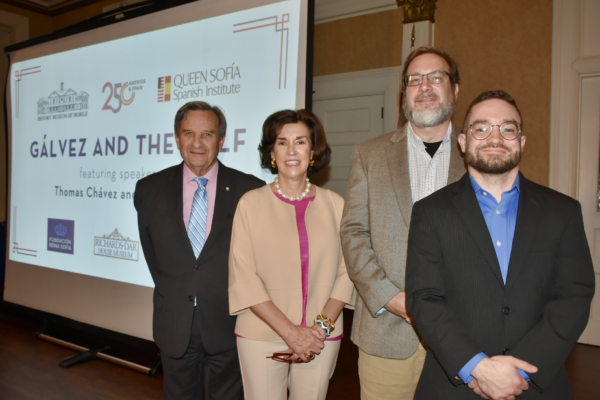
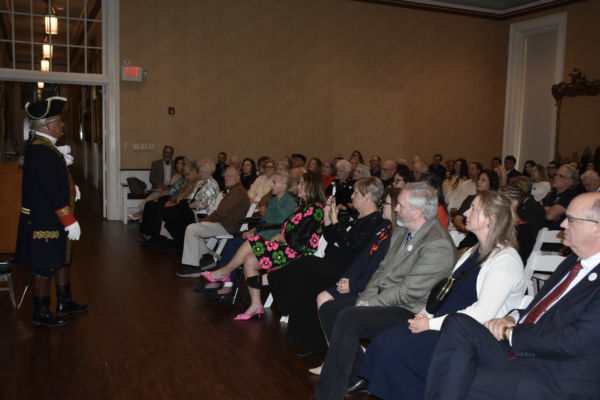
The program began on Friday at the History Museum of Mobile with Gálvez and the Gulf, an evening dedicated to exploring Spain’s southern campaign during the Revolutionary War. Author Mike Bunn and historian Prof. Thomas Chávez offered insightful perspectives that contextualized the strategic importance of the Gulf Coast and Spain’s contributions to the American cause.
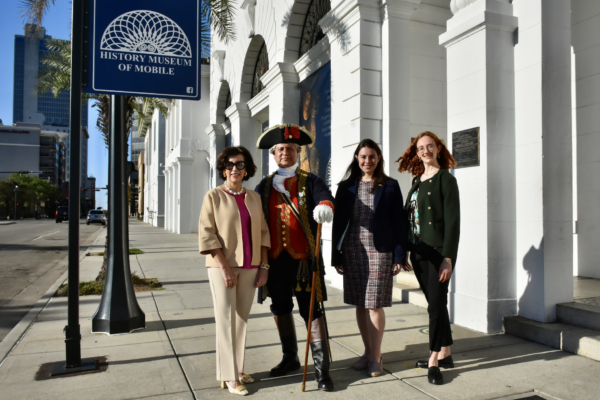
A reenactment of Bernardo de Gálvez, developed with historical rigor and supported by primary sources provided by QSSI, brought the figure to life, offering the audience an engaging interpretation of the period.
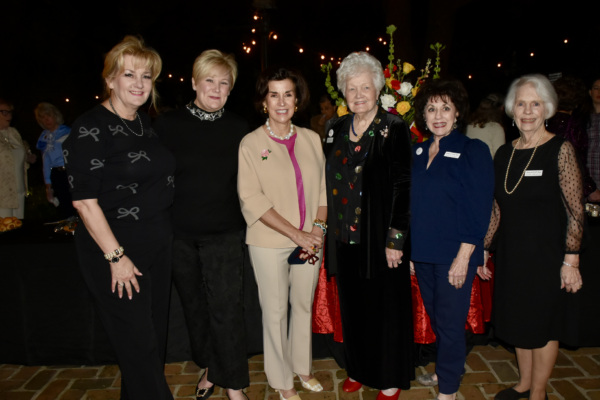
The evening concluded with a reception hosted by the Daughters of the American Revolution at the Richards-DAR House Museum.
Saturday: Reenactment of the Battle of Fort Charlotte
On Saturday, the program moved to downtown Mobile for a large-scale reenactment of the 1780 Battle of Fort Charlotte. Staged at the historic site, the reenactment depicted the moment when Spanish forces, under the command of Gálvez, captured the British fort, an episode that formed part of a broader and decisive campaign along the Gulf Coast.
The event was also attended by the Consul General of Spain in Houston, Jesús Sainz, who laid a wreath in memory of Bernardo de Gálvez, adding a moment of institutional recognition and tribute to the historical significance of the site.
The QSSI contributed primary sources to the script and supported the portrayal of Gálvez, ensuring both historical accuracy and interpretive depth. The reenactment underscored the importance of Mobile as a key site within the global context of the American Revolution, highlighting the Gulf Coast as an active and consequential theater of the war.